
Treasure Master
Gimica GmbHCasual
4.525.17K Reviews
- Version
- 1.16.0
- Installs
- 10.00M
- Age Rating
- Everyone
Screenshots
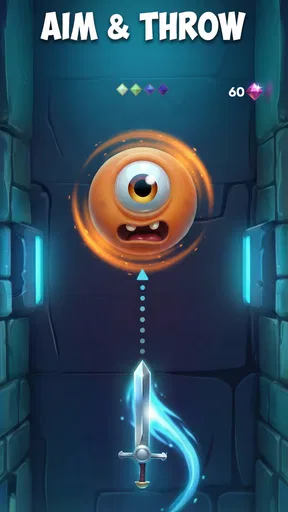
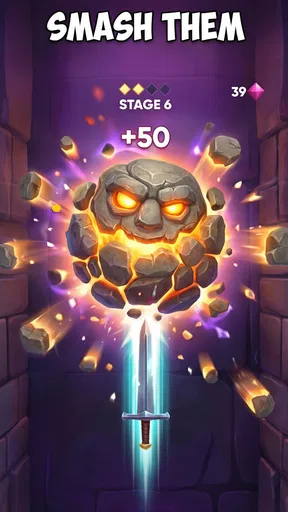
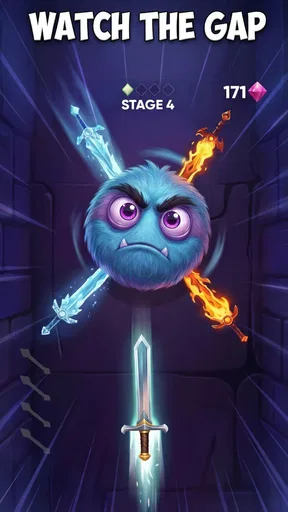
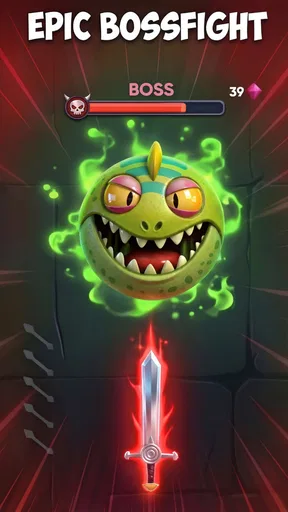
Our Review of Treasure Master
 Analysis by Appyee
I spent time with Treasure Master as the kind of quick casual game I can open without preparing for a long session. Its basic appeal is immediate: move through an arcade-style shooting adventure, deal with enemies and bosses, and keep chasing the next piece of treasure. That sounds simple, and it is, but the simplicity is also what makes it useful when I want a short distraction rather than a deep strategy game.
My overall impression is positive, with an important qualification. This is best approached as a light, repeatable casual shooter, not as a full-scale action game with elaborate progression or a story that demands attention. I enjoyed the short bursts of play, especially when a boss encounter gave a normal run a clearer goal. At the same time, players who need constant novelty, precise competitive controls, or a generous free experience may notice its limits fairly quickly.
How Treasure Master feels today
The game comes from Gimica GmbH and sits in the casual section, where accessibility matters more than complicated controls. It is free to install, rated for Everyone, and supports devices running Android 7.0 or later. Those details make it easy to recommend as a low-commitment download for a family tablet, an older compatible phone, or a personal device used for short breaks.
Its public reception also suggests that the straightforward format has found a sizeable audience: the game has an average rating of 4.5 from around 415 thousand ratings, with roughly 25 thousand written reviews and more than 10 million installs. I would not treat those figures as a guarantee that every player will enjoy it, but they do indicate that the basic loop is understandable and appealing to many people.
What I like most is how quickly the game communicates its purpose. I do not need to study a large map or learn a complicated control scheme before getting into the action. The treasure-hunting theme gives the shooting a reason to continue, while the boss idea adds a useful sense of destination. Even when I only have a few minutes, there is a clear reason to play one more attempt.
That convenience comes with a trade-off. The same streamlined design that makes the game approachable can make it feel repetitive if I play for too long in one sitting. I found it more enjoyable when I treated it as a sequence of compact sessions instead of trying to force a long evening from it. That is an important distinction: it works better as a pocket arcade diversion than as my main game.
The practical appeal of short sessions
A realistic use case is a commute, a waiting room, or the few minutes before another task begins. I can start a run, focus on the immediate enemies, and stop without feeling that I have abandoned a complicated narrative. For someone who wants a game that fills small gaps in the day, that structure is more useful than a slower adventure with extensive dialogue or a large inventory to manage.
I also see a place for it after a demanding game session. If I have just finished something competitive or mentally heavy, Treasure Master offers a simpler rhythm. The player is still reacting and aiming, but the experience does not ask for the same level of planning as a tactical game. That makes it a good palate cleanser, provided I am comfortable with repetition.
On the other hand, I would skip it if my priority is a story-driven treasure adventure. The treasure theme frames the action, but it should not be mistaken for a narrative exploration game. Players looking for puzzles, character development, or a large world to investigate will probably be happier with a different category of game altogether.
What the shooting loop does well
The strongest part of the design is the immediate relationship between movement through the adventure and shooting at threats. Each encounter gives me a simple short-term objective: survive the action, clear what is in front of me, and work toward the next major confrontation. That clarity prevents the game from feeling aimless.
Bosses are especially important because they break up the ordinary rhythm. A standard enemy encounter can be satisfying for a moment, but a boss gives the run a recognizable peak. I found myself playing more deliberately when I knew a larger challenge was approaching. I paid closer attention to timing and avoided wasting effort early, because reaching the boss made the previous section feel like preparation rather than a disconnected sequence.
One useful personal rule is to avoid treating every moment as a race. In an arcade shooter, the temptation is to react immediately to everything on screen. I had better results when I watched the space around my character for a moment, handled the most urgent threat first, and kept my attention on the route ahead. That small change made the action feel less frantic and helped me understand why certain attempts ended badly.
Another tip is to use the boss as a test of the whole run, not just as the final obstacle. If I repeatedly reach a boss with too little room for error, the problem may be earlier in the stage. Playing the preceding section more carefully can matter as much as reacting faster during the boss encounter. This is the kind of lesson I would not get from the short store wording, but it changes how I approach repeated attempts.
How the current version affects the experience
The current version is 1.12.0, and I see that as a useful sign that the game has continued beyond its initial launch. It was released on November 16, 2021, so this is not a brand-new experiment that has only just appeared. The version number tells existing players that the product has moved through several iterations, although I would avoid assuming that every update changes the core experience.
For a new player, the practical effect is that I am entering an established casual game rather than an unfinished first release. The central identity remains clear: arcade shooting, treasure hunting, and boss encounters. That continuity is good for people who want to understand the game quickly, but it also means I would not download it expecting a completely different experience from the one its premise suggests.
Existing users may appreciate the stability of a familiar loop. If you already enjoy short runs, a new version can be a reason to return and see how the current build feels on your device. My advice is to judge it by the quality of those repeat sessions rather than by the version number alone. A higher version does not automatically make a repetitive game inexhaustible.
Device compatibility is another practical point. Android 7.0 as the minimum operating system opens the door to many older devices, which suits the game’s casual role. Still, compatibility on paper is not identical to comfort in use. Screen size, touch response, battery condition, and general device performance can affect how pleasant a shooter feels. If your phone is old or crowded with background tasks, I would test a short session before deciding whether it belongs in regular rotation.
Free access and the real trade-off
The game is free, but it includes in-app purchases ranging from $0.99 to $15.99 per item. That matters because free entry and a completely frictionless experience are not the same thing. I can try the core game without paying upfront, which is valuable when I am unsure whether the shooting loop will hold my attention. The sensible approach is to decide in advance whether I want to spend anything, rather than making a purchase simply because a difficult moment becomes frustrating.
For me, the best test is whether the free version already provides enough enjoyment during ordinary short sessions. If it does, optional spending becomes a choice rather than a requirement. If I feel pressured to pay before I understand the game, that is a sign to step away. Parents should also remember that an Everyone age rating describes the intended content audience, not a promise that every purchase decision will be obvious to a child.
There is a useful difference between paying to support a game I genuinely enjoy and paying to bypass a design that has stopped being fun. I would only consider an in-app purchase after I had played enough to know that the game’s basic loop suits me. This is particularly important here because the appeal depends on repetition; no purchase can change whether I personally enjoy repeating arcade encounters.
Who should install it, and who should skip it
I would recommend Treasure Master to someone who wants an accessible shooter that can be played in small pieces. It is a good fit for casual players who like clear action, treasure-themed progression, and the occasional boss as a target to work toward. It also suits people who prefer learning through repeated attempts instead of reading a long tutorial or managing a complicated set of systems.
I would be more cautious with players who want a deep competitive experience. This is not where I would look for serious multiplayer rivalry, detailed tactical planning, or a large role-playing build. Likewise, if you dislike repeating similar action patterns, the game may lose its charm before you feel that the treasure hunt has paid off.
Compared with a typical puzzle game, it asks for quicker reactions and gives less time to think. Compared with a traditional premium arcade title, its free entry is friendlier, but the presence of purchases may make the experience feel less self-contained. Compared with a story-heavy adventure, it offers faster access to play but much less emotional or narrative investment. Those comparisons explain its place well: it is a convenient middle ground for action fans who do not want a major commitment.
Small habits that improve repeated runs
The first habit I recommend is setting a session limit before opening the game. Because the loop is easy to restart, it can be tempting to continue after a disappointing attempt. A short break often helps more than immediately repeating the same approach. I found that returning with a calmer focus made boss sections feel more manageable than simply playing faster.
The second is to separate experimentation from progress. In one attempt, I might focus on learning how the enemies approach or how a section flows. In the next, I can try to play more efficiently. Expecting every run to be a perfect advance makes the game feel harsher than it needs to be. Treating failed attempts as information gives the casual format more depth.
The third is to consider where the game fits in your device habits. It is convenient for a quick break, but a shooter is less comfortable when played one-handed while walking or doing another task. I prefer using both hands and giving the screen my full attention, especially near a boss. That may sound obvious, but it prevents the game from becoming frustrating for reasons unrelated to its design.
Finally, I would keep an eye on spending behavior rather than assuming that a low-cost item is automatically harmless. The individual purchase range starts at $0.99 and reaches $15.99, so the total can grow if several small decisions accumulate. The free starting point is a strength, but it works best when I treat purchases as optional entertainment spending and not as a solution to every difficult run.
Where the experience still feels limited
The main weakness is longevity for players who need frequent mechanical change. The premise is strong enough to carry short sessions, but shooting through enemies and working toward bosses can become familiar. I did not see the game as something that replaces a broader arcade library; I saw it as one focused option within that library.
There is also a risk of confusing accessibility with depth. Simple controls are excellent when I want to start quickly, yet they leave fewer layers to master than a more demanding action game. Once I understand the basic rhythm, my enjoyment depends heavily on whether I am in the mood for another compact run. That is not a flaw for its intended audience, but it is a real limitation for anyone searching for a long-term skill challenge.
The monetization model adds another point of friction. Free access lowers the barrier to trying the game, while purchases can complicate the feeling of a straightforward arcade session. My recommendation is to enjoy the game on its own terms and resist judging progress by what might be available through spending. If that balance does not feel comfortable, a paid game with a single upfront cost may be the better alternative.
What I would watch as a returning player
If I return to the game, I would pay attention to whether new versions improve the variety and pacing of the existing loop rather than merely extending it. The current 1.12.0 build shows an ongoing product, but the meaningful question for me is how updates affect repeat play: do boss encounters remain interesting, does the journey feel less predictable, and does the free experience continue to stand on its own?
I would also watch how well the game keeps its approachable identity while giving experienced players a reason to continue. Adding complexity too aggressively could hurt the quick-play quality that makes it attractive. Adding too little variety could leave regular players feeling that they have seen the important parts already. The best direction would preserve immediate shooting while giving repeat users more meaningful reasons to refine their approach.
For someone deciding whether to download it now, my advice is simple: install it if you want a free, casual arcade shooter for short sessions and you enjoy the idea of working through action toward bosses. Give it enough time to judge the repeat loop, but do not force yourself to turn it into a long-form game. Keep purchases optional, play with focused attention, and use failed runs to learn rather than chase frustration.
My final view is that Treasure Master succeeds when I use it for what it is. It is not a substitute for a deep adventure, a serious competitive shooter, or a premium game built around a single complete campaign. It is a convenient treasure-themed arcade diversion with approachable action, a clear boss-driven rhythm, and a free starting point. If you want quick shooting sessions with a simple goal, it is worth trying; if you need constant variety or substantial depth, choose something more ambitious.
Privacy and Permissions
See what permissions an app requests and how it handles your data.
- Photos/Media/Files
- read the contents of your USB storage
- Storage
- read the contents of your USB storage
- Wi-Fi connection information
- view Wi-Fi connections
- Other
- view network connections, full network access, read terms you added to the dictionary, control vibration, prevent device from sleeping, Google Play license check
Verdict
Strengths of Treasure Master
- Simple controls make it easy to start playing immediately.
- Short levels suit quick gaming sessions on mobile devices.
- Treasure-hunting theme gives the game a clear sense of adventure.
- Progression rewards regular play and encourages continued exploration.
- Runs well on many devices with modest hardware requirements.
Limitations of Treasure Master
- Gameplay may become repetitive after extended sessions.
- Some challenges can feel more dependent on luck than skill.
- Ads may interrupt the experience, especially between levels.
- Limited variety can reduce long-term appeal for experienced players.
- Offline availability and features may be restricted in some areas.
Other Releases by Gimica GmbH
View All


Similar Picks in This Category
View All
My Talking Angela
Outfit7 Limited4.2

My Talking Tom
Outfit7 Limited4.3

Pou
Zakeh4.2

My Talking Tom 2: Pet Game
Outfit7 Limited4.3

Candy Crush Saga
King4.6

Bridge Race
Supersonic Studios LTD4.1
Frequently Asked Questions
What is Treasure Master, and how does the game work?
Treasure Master is an adventure and puzzle game focused on discovering hidden rewards, overcoming obstacles, and progressing through treasure-filled stages. Gameplay generally combines exploration, quick decisions, and challenges that become more demanding over time. Players should expect a casual experience designed for short sessions, although collecting everything and completing later levels may require more patience and repeated attempts.
Is Treasure Master free to download and play?
Treasure Master can typically be downloaded and started without an upfront purchase, making it accessible to most players. However, the game may include optional in-app purchases for coins, power-ups, extra attempts, cosmetic items, or faster progression. Before downloading, check the store listing for the current pricing details and review the purchase settings, especially if children may use the device.
Does Treasure Master require an internet connection?
The basic gameplay experience may work without a constant internet connection, which is useful when playing during travel or in areas with limited coverage. Nevertheless, certain features can depend on online access, including advertisements, cloud saves, event content, rankings, updates, and in-app purchases. Availability may also vary between Android and iOS, so players should test offline functionality after installation.
Is Treasure Master suitable for children and younger players?
Treasure Master is generally easy to understand, but suitability depends on the specific version, advertising content, and purchase options included in the app. Parents should review the age rating, privacy information, permissions, and any interaction or advertising features before allowing children to play. It is also recommended to enable parental controls and require authentication for all in-app purchases.
What should I know about ads, permissions, and device performance?
Like many free mobile games, Treasure Master may display advertisements, particularly between levels or after completing an activity. The game can also require permissions related to notifications, analytics, or purchases, depending on the platform and version. Performance is usually best on a reasonably modern device with sufficient storage. If the game feels slow, updating the app, closing background apps, and checking available space may help.
Play our best games!


